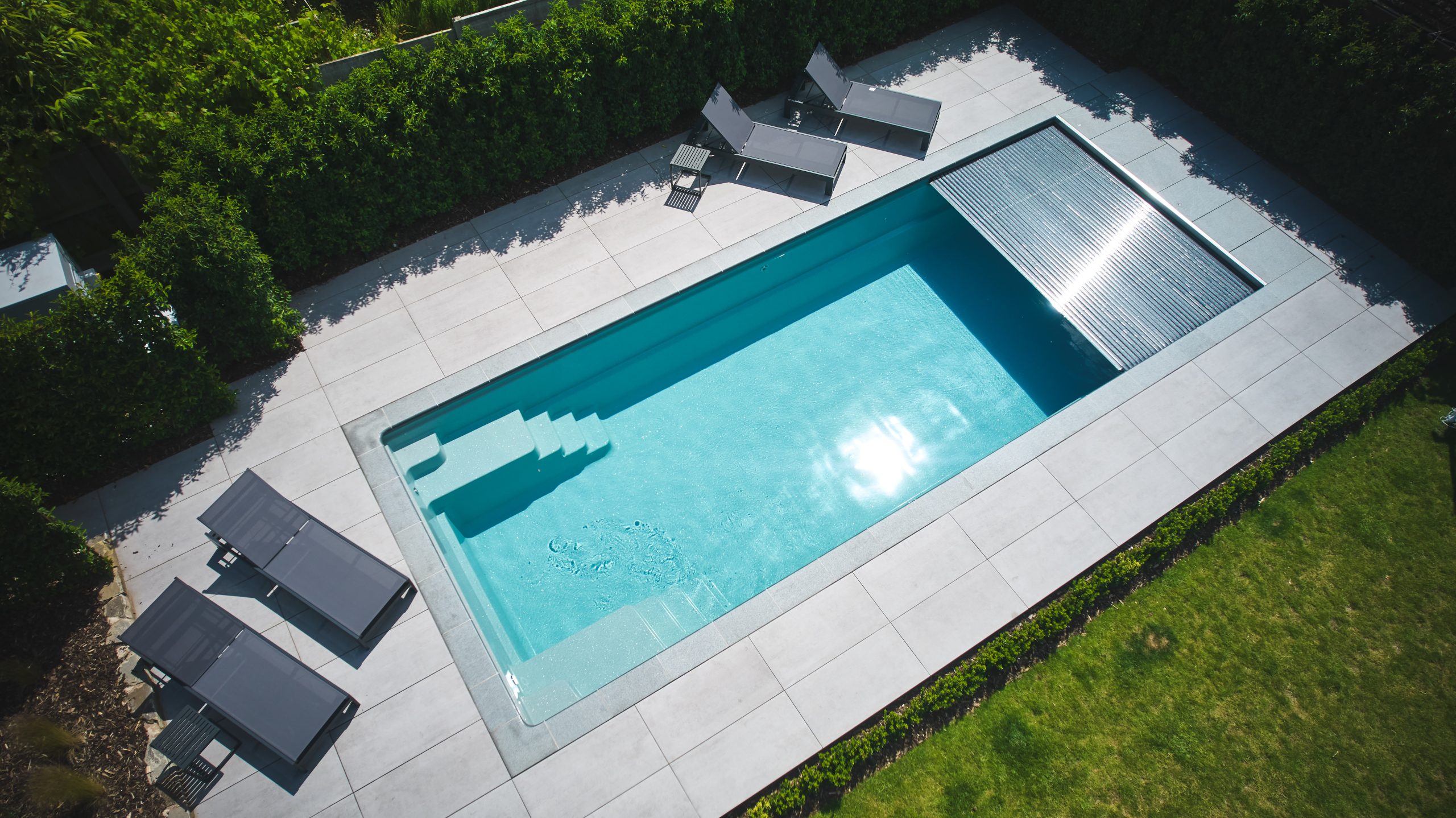
Compass Fit in-ground swim spa now available to test at our HQ.

The Sliding Scale of Safety: What You Really Need to Know About Pool Covers

When you invest in a swimming pool, safety is naturally one of your top priorities. It is easy to assume that a pool cover is a binary safety switch—either the pool is "safe" because it is covered, or "unsafe" because it isn't. However, the reality of pool cover safety—and how it impacts your long-term running costs, reliability, and pool aesthetics—is much more complex.

Before we dive in, there is one golden rule that must be stated: no pool cover, regardless of its design, is a substitute for vigilant adult supervision. General water safety, education, and keeping a watchful eye are always your primary lines of defence. A cover is simply a backup layer.

Think of pool covers like vehicles. A motorbike, an older automatic saloon, a modern 4×4, and a high-end electric vehicle will all get you from A to B, but they offer vastly different levels of protection, efficiency, and engineering. Pool safety is a sliding scale, and some covers can actually make your pool more dangerous.

Let’s look at the four main options for pool covers to see how they compare across safety, bills, reliability, and how they impact the look of your garden.
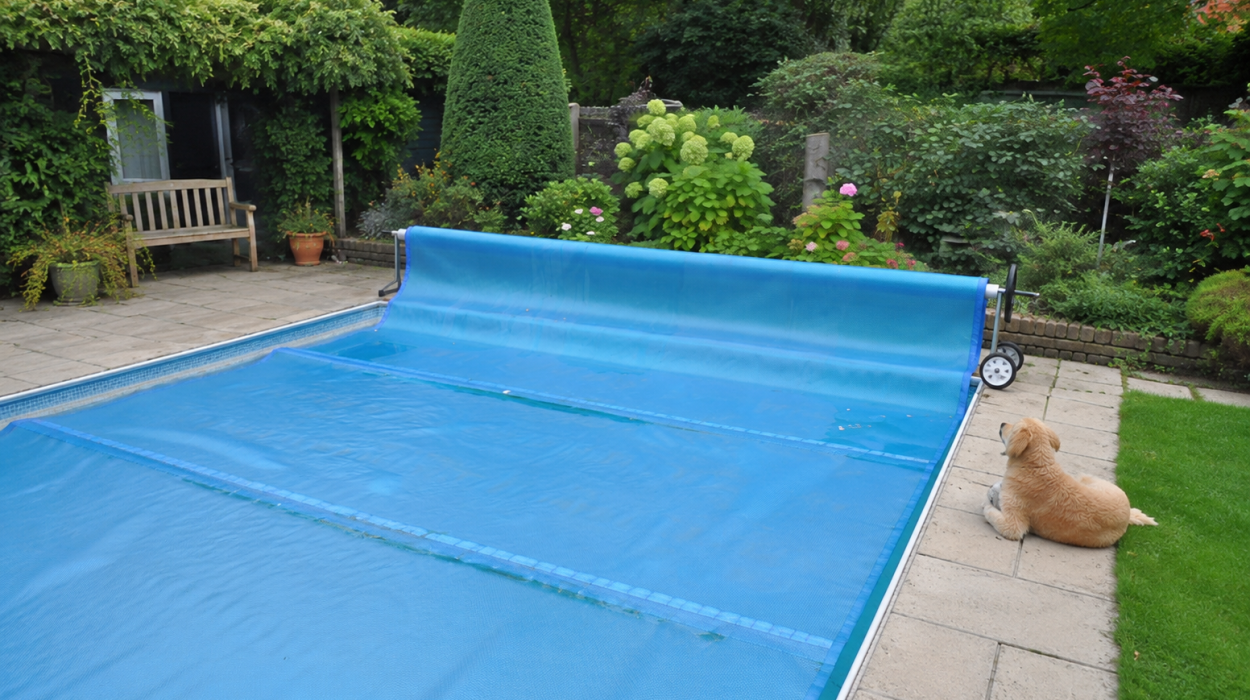
Bubble Covers: The Motorbike of Pool Covers

Bubble covers (also known as solar covers) are the most common and inexpensive type of pool cover on the UK market. When it comes to mechanical reliability, they are unmatched simply because there are no moving parts to break or tracks to clean. However, they score incredibly poorly on both safety and aesthetics. Visually, a bubble cover cannot be hidden or integrated into the pool structure. It requires a bulky, manually operated metal reel that permanently sits on your pool decking, ruining the clean lines of your garden landscaping.

More importantly, sitting firmly at the absolute bottom of the safety scale, they provide zero protection. Much like riding a motorbike, if things go wrong, there is no structural barrier to save you. Because bubble covers float freely on the surface, they cannot support any weight. If a child or a pet steps onto one, they will immediately sink. Worse still, the cover can wrap around them or trap them underneath the surface, disorientating them and making it incredibly difficult to resurface or for a rescuer to spot them quickly.

  • The Verdict: The most reliable for basic evaporation control, but an eyesore and terrible for safety. Never rely on a bubble cover to keep your pool secure.

Stretched Fabric Covers: The Early Automatic Saloon

Stretched fabric covers (heavy-duty PVC systems that run on tracks) are heavily marketed as “automatic safety covers.” They offer a solid physical barrier, but they possess significant design blind spots and reliability challenges.

When it comes to running costs, standard PVC fabric provides virtually no thermal resistance (a very poor U-value). It stops evaporation, but because the material is so thin, heat easily escapes straight through the fabric into the cold night air.

  • The Puddle Trap & Structural Threat: These covers naturally collect rainwater on top, creating a serious drowning hazard. If you forget to deploy your automatic pool cover pump, the accumulating water creates an immense downward drag that can literally rip the tracks out of your decking and cause severe structural damage to the pool walls.
  • The Maintenance & Aesthetic Trade-off: Stretched fabric covers require high maintenance. Because they operate on a track system embedded in your decking, those tracks must be kept meticulously clean, or the cover will jam. Visually, they cannot be integrated into the pool wall; they must run along the deck, meaning the mechanical housing box sits permanently at one end of your pool.
  • The Verdict: A massive step up from bubble covers in safety, but poor insulation, high track maintenance, and deck-mounted housing mean they lack the visual and mechanical elegance of a slatted system.

Slatted Covers: The Modern 4x4

At the top of the mechanical safety, reliability, and insulation scale are slatted covers, which look like floating roller shutters. They are highly durable, time-tested, and effortlessly automated. Like a modern 4×4 with a reinforced chassis, they offer a very high level of physical protection—but only if they are engineered and installed correctly.

To make a slatted cover a true safety cover, it must have underlying structural support. When installed in a Compass pool that features a built-in safety ledge, the mechanics change completely. If someone walks onto the cover, the slatted edges catch on the submerged safety ledge beneath them.

  • The Weight Test: Under the strict NF P 90-308 standard, a properly supported cover must safely hold up to 100kg of weight (the average weight of an adult) without tearing or breaking.
  • Minimal Sinking: Even under that 100kg load, a cover resting on a safety ledge will only depress by about 75mm, keeping the person safely above the main body of water until they can step off.

The Aesthetic and Reliability Advantage: Slatted covers are the gold standard for aesthetics because they can be fully integrated into the wall or floor of the pool structure. When open, the entire mechanism can roll away into a hidden underwater niche, completely vanishing from sight. Furthermore, because they float directly on the water and don’t rely on tight side-tracks to pull tension, they are far more reliable and require considerably less maintenance than track-based systems. They also offer the best insulation on the market, dramatically slashing your heating bills.

  • The Verdict: When paired with a safety ledge and installed to NF P 90-308 standards, automated slatted covers provide incredible energy efficiency, high reliability, and a completely invisible aesthetic when open.

Coverseal: The High-End Electric Vehicle

If slatted covers are the reliable modern 4×4, the Coverseal system is like a luxury electric vehicle. It is packed with high-end tech and addresses the dangerous puddle trap found in traditional fabric covers by utilising a unique, patented tensioning mechanism. Instead of sagging under the weight of rainwater, a Coverseal membrane is pre-stressed and locked tightly into a 10mm ultra-flat rail system.

  • The Reliability Reality: While highly innovative, Coverseal systems are generally less reliable than slatted covers. Because the system relies on extreme fabric tension, precise automated motor alignment, and sensitive electronics, it is much more vulnerable to technical faults if the tracks aren’t perfectly aligned or if debris interferes with the mechanism.
  • The Maintenance Burden: Like traditional fabric covers, Coverseal requires regular physical upkeep. The rails must be routinely cleared of dirt and leaves to ensure the membrane doesn’t jam. Furthermore, Coverseal relies on central micro-holes to let rainwater drain away. You must regularly clear leaves off the cover; if those micro-holes clog, water will pool, recreating the exact hazard the system is meant to prevent.
  • The Aesthetic and Insulation Limits: Because the system cannot be hidden or integrated into the pool wall, it takes a hit on aesthetics. The tracks sit permanently exposed on your patio, and the casing box remains fully top-mounted on the deck. In terms of energy, it shares the same limitation as stretched fabric: it stops evaporation brilliantly but offers very little true thermal insulation.
  • The Verdict: A premium, ultra-taut safety option that eliminates the need for an external pump. However, it requires a strict track-cleaning routine, cannot be hidden inside the pool structure, and is more sensitive to reliability issues than a slatted system.

The Pool Cover Comparison Matrix

For a quick overview of how these systems stack up, here is a breakdown of their real-world performance:

Cover Type True Safety Level Energy Profile Hidden Hassles Aesthetics & Integration Install Cost Overall Score
1. Bubble Covers None
Severe sinking and entrapment hazard.
⚠️ Basic
Stops evaporation, but zero thermal insulation.
Low Hassle
No tracks to jam, no pumps required.
Poor
Requires a bulky, permanent manual roller on the patio.
💷 Lowest 2 / 10
2. Slatted Covers
(With Safety Ledge)
⭐⭐⭐⭐ Very Good
Supports 100kg (NF P 90-308 standard).
Excellent
Stops evaporation AND acts as a thick thermal blanket.
Low Hassle
Floats freely. No tracks to jam, no cover pump required. Does require pressure wash & pit clean
⭐⭐⭐⭐⭐ Exceptional
Can be integrated invisibly inside the pool wall/floor.
💷💷 High 9 / 10
3. Coverseal ⭐⭐⭐⭐⭐ Exceptional
Locked ultra-taut to easily support adult weight.
⚠️ Basic
Stops evaporation, but zero thermal insulation.
⚠️ Moderate Hassle
Micro-holes must be kept completely clear of leaves to drain rainwater.
⭐⭐ Moderate
Membrane looks sleek, but tracks and top-mounted box remain visible.
💷💷💷 Premium 7.5 / 10
4. Stretched Fabric ⭐⭐⭐ Good
Solid barrier, but pooled water is a drowning hazard.
⚠️ Basic
Stops evaporation, but zero thermal insulation.
High Hassle
Absolutely requires an electric cover pump a after use. Tracks need deep cleaning.
⭐⭐⭐⭐ Very Good
Can be integrated into the pool shell with tracks under the coping.
💷💷💷💷 Highest 7 / 10

The Bottom Line

When it comes to pool safety, assuming any cover will do the job is a dangerous game. Safety is a sliding scale, and a cover is only a protective feature if it is designed, supported, and installed to be one. Most importantly, no mechanical barrier will ever replace human vigilance. If you are upgrading your pool or building a new one, always ask your pool builder specifically about the NF P 90-308 standard, safety ledges, and true thermal efficiency. Your family’s safety—and your bank balance—are worth the extra attention to detail.

0333 4567 111 Find a Pool Builder Free Brochure Cost Calculator

I am interested in:
The Sliding Scale of Safety: What You Really Need to Know About Pool Covers

Building a pool?

Don't go without your brochure

To learn more about our services, we will send you a free copy of our latest brochure.